
Get the resident evaluated and, if needed, moved
A hospital evaluation documents the injury independently and treats it. If the resident is not safe, the move comes first.
Personal injury
Most nursing home injuries are not a single act of cruelty. They are what happens when a facility runs with too few staff for too long. California’s elder abuse law was written for exactly that, and it gives families remedies that ordinary negligence law does not. The consultation is free.
 Patrick S. AguirrePersonal injury attorney · Long Beach & Downey offices, serving all of California4.7 out of 5 from 40+ Google reviews.
Callback request
Leave your contact information and, if helpful, a short general summary. The office will follow up.
The office received your contact request. If your matter is urgent, call 562-471-3512.
The signs
The law
Welfare and Institutions Code 15610.57 defines neglect as the failure of a person with care or custody of an elder or dependent adult to use the care a reasonable person in that position would use, and lists what that includes: failing to assist with hygiene or provide food, clothing, or shelter; failing to provide medical care; failing to protect from health and safety hazards; and failing to prevent malnutrition or dehydration. Those are the injuries on the list above.
Welfare and Institutions Code 15657 is what changes the case. Where a family proves by clear and convincing evidence that the neglect was reckless, oppressive, fraudulent, or malicious — or, since 1 January 2026, by a preponderance of the evidence where the court finds under Welfare and Institutions Code 15657.02 that the facility destroyed evidence — the court must award the family’s reasonable attorney’s fees and costs, and the resident’s pain and suffering before death can be recovered even after the resident has died, up to the cap set by Civil Code 3333.2, which is $470,000 in 2026. An ordinary negligence or malpractice claim carries no fee award, and its treatment of a deceased person’s pain and suffering has been far narrower. Understaffing that a facility knew about and ran anyway is the classic path to that finding.
Health and Safety Code 1430(b) adds a resident’s own right to sue a skilled nursing or intermediate care facility for violating the rights set out in Title 22 of the California Code of Regulations or in any other state or federal law. For violations on or after 1 March 2021 the licensee is liable for up to $500 for each violation, plus costs and attorney’s fees, and may be enjoined; for earlier violations the $500 was a single cap rather than per violation. Any waiver of that right is void.
Sources: Welfare and Institutions Code 15610.57 — neglect defined; Welfare and Institutions Code 15657(a)–(b) — mandatory attorney’s fees, and pre-death pain and suffering capped at Civil Code 3333.2(b); Welfare and Institutions Code 15657.02 — since 1 January 2026, a court may apply a preponderance standard where the facility spoliated evidence; Health and Safety Code 1430(b)(1)(B) — up to $500 per violation, plus costs and fees, for violations on or after 1 March 2021.
Who regulates
Skilled nursing facilities are licensed by the California Department of Public Health, which investigates complaints and publishes its inspection findings, the statements of deficiencies, for every licensed facility. Those reports are public and often show that the problem your family found was cited before. The Long-Term Care Ombudsman program takes complaints confidentially about nursing homes and assisted living facilities and advocates for residents inside them. Adult Protective Services handles elders living at home. Assault or theft is a police matter.
Assisted living facilities, licensed in California as residential care facilities for the elderly, are regulated by the Department of Social Services under a different and lighter set of rules. The Elder Abuse Act applies to them just the same.
Reporting protects the resident and creates a record. It does not replace the civil claim, and it does not stop any deadline.
The admission packet
Admission paperwork often contains an agreement to arbitrate any dispute with the facility. For agreements signed since late 2019, federal nursing-home regulations bar a facility from requiring arbitration as a condition of admission or continued care, require the facility to explain the right not to sign, and require a 30-day right to rescind. California makes any waiver of the right to sue under Health and Safety Code 1430(b) void. Whether an agreement signed by a family member binds the resident, or binds the family’s own wrongful-death claim, is a frequent and often winnable fight. Do not assume the packet ended your options.
What is at stake
The medical care the neglect made necessary, the cost of moving to a safe facility, the resident’s pain and suffering, the enhanced remedies of the Elder Abuse Act including attorney’s fees, and, when a resident dies, the family’s wrongful-death damages. The defendants are the facility, its licensee, and frequently the corporate owners and management companies behind it. Staffing is the evidence: California requires a minimum number of nursing hours per resident each day, and a facility’s own staffing records against its census show whether it met them.
Deadlines
Personal injury and wrongful-death claims generally carry a two-year statute under Code of Civil Procedure 335.1. But a claim against a licensed facility that is framed as professional negligence can fall under Code of Civil Procedure 340.5, which runs one year from discovery, and facilities argue for that clock. The safe course is to treat the deadline as one year from the day the family learned of the injury. A county-run facility requires a written government claim within six months under Government Code 911.2.
The chart, the care plans, the assessments, the incident reports, and the staffing records exist today. Request them in writing now; facilities keep video for days and rewrite care plans as a matter of routine.
The first weeks
A hospital evaluation documents the injury independently and treats it. If the resident is not safe, the move comes first.
The injuries, the room, the bedding, the call light, the resident’s condition on each visit, with dates.
The full chart, the care plans, the assessments, the medication records, the incident reports, and the staffing schedules for the relevant weeks.
With the Department of Public Health and the Long-Term Care Ombudsman. Ask for the complaint numbers.
Not a revised agreement, not a release, not an incident acknowledgment. Route the facility’s calls to the office.
The office
The office obtains the complete record and the facility’s public inspection history, has the medicine reviewed, and identifies the licensee, the owners, and the management company behind the facility. The regulatory complaint is filed alongside the civil claim, not instead of it. Where the evidence supports the Elder Abuse Act’s heightened standard, the case is pleaded for its enhanced remedies, and it proceeds in Los Angeles Superior Court or, where an enforceable agreement requires it, in arbitration, with the arbitration agreement itself examined first.
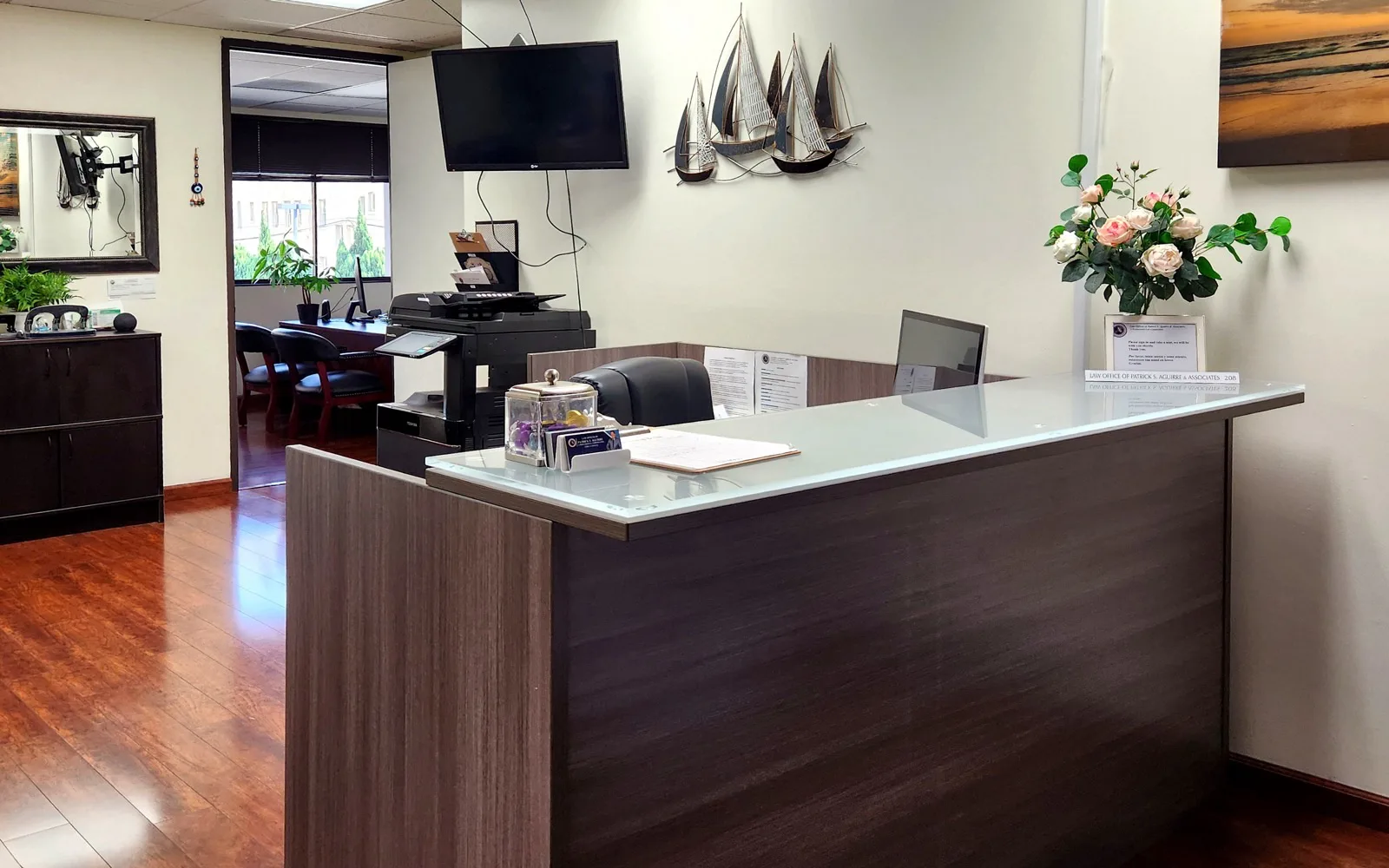
The office has represented injured people and their families in Long Beach and across Los Angeles County for nearly three decades. The firm now has offices in Long Beach and Downey, and speaks Spanish.
Frequently asked questions
Often. Advanced pressure injuries develop when a resident is not repositioned, kept clean and dry, and monitored, all of which are basic nursing care. The facility’s own records of turning and skin checks, compared with the wound’s progression, usually answer the question.
Possibly. Federal rules bar facilities from requiring arbitration as a condition of admission and require a 30-day rescission right, California voids waivers of the right to sue under the Patients’ Bill of Rights, and an agreement signed by a family member may not bind the resident or the family’s wrongful-death claim. The agreement is the first document the office reviews.
The Elder Abuse Act applies to any person or facility with care or custody of an elder or dependent adult, including assisted living. The licensing agency and the detailed regulations differ, and the Patients’ Bill of Rights remedy is specific to skilled nursing facilities, but the core claim is the same.
Yes. The family has a wrongful-death claim for its own losses, and under the Elder Abuse Act the estate can recover the pain and suffering he experienced before death, which ordinary law would not allow. Deadlines run from the death and from the family’s discovery of the neglect, so the records should be requested at once.
Selected case results
A selection from 55 documented results
$2,850,000
Premises liability
$320,000
Maricopa County, Arizona
$480,000
Premises liability
$520,000
Maricopa County, Arizona
$360,000
Los Angeles Superior Court
Client experiences
Patrick and his staff were very helpful with taking care of all the bills and legalities, so we can focus on healing.
Got my money and my vehicle fixed. Don’t hesitate to give them a call.
Patrick helped me with a dog bite case. He was able to get me more than I expected and was easy to work with. … I would recommend his services.
Patrick is very reliable, trustworthy, and will definitely be able to help you out. Cost is very reasonable.


Meet your attorney
A Professional Law Corporation
The future of your case may depend on a successful outcome. It can be stressful to go through the legal process alone—but thankfully, you don’t have to.
The Law Offices of Patrick S. Aguirre will stand up for clients’ interests and rights, providing high-quality representation in personal injury cases and criminal defense matters throughout California from its Long Beach office.
We work with you and for your best interests. Our legal team is compassionate, hard-working, and tenacious—fighting to get the job done right when it matters most. No case is too complicated or insignificant for our full attention. Our clients may move forward into a brighter future free from worry about past mistakes.
We’re the legal team that never gives up. When you need an attorney who will fight for what’s right, turn to us, and we’ll do everything in our power to help. No matter how challenging your situation may seem, there is hope.
“Courage is the most important attribute of a lawyer.”
Robert F. Kennedy
Free consultation
Tell us how to reach you and the office will call you back to discuss your accident and your options.
Callback request
Leave your contact information and, if helpful, a short general summary. The office will follow up.
The office received your contact request. If your matter is urgent, call 562-471-3512.