
Criminal defense
Robbery and firearm charges
Norwalk Superior Court
Not-guilty verdict
Criminal defense
A strike case is not decided by how many felonies are on a record. It is decided by which convictions qualify, what the current charge is, and whether a judge can be persuaded to strike a prior. Those are three separate fights, and each one is winnable on its own. The consultation is free.
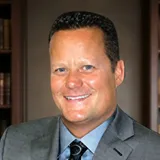 Patrick S. AguirreCriminal defense attorney · Long Beach
Callback request
Leave your contact information and, if helpful, a short general summary. The office will follow up.
The office received your contact request. If your matter is urgent, call 562-904-4337.
What counts
California’s Three Strikes law does not count felonies. It counts prior convictions for offenses that appear on one of two statutory lists: the serious felonies in Penal Code 1192.7(c) and the violent felonies in Penal Code 667.5(c). A conviction that is on neither list is not a strike, however serious it felt, and a record with several felonies on it may contain no strikes at all.
The lists include murder and voluntary manslaughter, rape, robbery, kidnapping, arson, attempted murder, criminal threats under Penal Code 422, any felony in which the defendant personally inflicted great bodily injury on someone other than an accomplice, and any felony in which the defendant personally used a firearm or a dangerous or deadly weapon. Burglary is on the list only in the first degree, meaning burglary of an inhabited dwelling. Penal Code 460 recognises first and second degree burglary and nothing else; there is no third degree burglary in California, and second degree burglary is not a strike.
A juvenile adjudication can count, but only if it meets all of the conditions in Penal Code 1170.12(b)(3): the person was at least 16, the offense is a listed one, and the juvenile court found them fit and adjudged them a ward for a Welfare and Institutions Code 707(b) offense.
Sources: Penal Code 1192.7(c) — the list of serious felonies; Penal Code 667.5(c) — the list of violent felonies; Penal Code 1170.12(b)(1) — a prior strike is a conviction on one of those two lists.
Felony DUI
This is the correction most worth making, because the opposite was stated on this site for years. Driving under the influence becomes a felony under Vehicle Code 23550 when it is the fourth within ten years, or under Vehicle Code 23550.5 when there is a prior felony DUI. Neither of those makes it a strike. Felony DUI does not appear on the serious felony list or the violent felony list, and counting DUI convictions does not produce a strike no matter how high the count goes.
A DUI can become a strike, but only by a different route. If a DUI caused injury and the defendant personally inflicted great bodily injury on someone other than an accomplice, the conviction can qualify as a serious felony under Penal Code 1192.7(c)(8), and the great-bodily-injury allegation has to be pleaded and found true. Whether that applies to a particular case is a real legal question, not a matter of arithmetic, and it is worth getting a straight answer on before any plea.
Sources: Vehicle Code 23550 — a fourth DUI within 10 years is a felony; Vehicle Code 23550.5 — a DUI after a prior felony DUI; Penal Code 1192.7(c)(8) — personal infliction of great bodily injury.
The sentence
With one prior strike, the term for the current felony is doubled, probation is unavailable, and conduct credits are capped at one-fifth of the sentence. That is a second-strike case, and it is the most common strike case by a wide margin.
With two or more prior strikes, what happens depends on the current charge, and this is what Proposition 36 changed in 2012. If the current felony is itself serious or violent, the sentence is an indeterminate life term with a minimum of at least 25 years. If the current felony is neither serious nor violent, the defendant is sentenced as a second-striker, with the term doubled instead, unless the prosecution pleads and proves one of the exceptions in Penal Code 1170.12(c)(2)(C): specified controlled-substance or sex offenses, arming or use of a firearm or deadly weapon or intent to cause great bodily injury during the current offense, or a prior conviction for one of the enumerated offenses such as a sexually violent offense or any homicide.
The older description, that a third felony of any kind means 25 to life, has been wrong since 2012. It is still the assumption most people walk in with, and it changes what a case is worth negotiating.
Sources: Penal Code 1170.12(c)(1) — one prior strike doubles the term; Penal Code 1170.12(c)(2)(A) — the 25-year minimum; Penal Code 1170.12(c)(2)(C) — Proposition 36: a non-serious, non-violent current offense is sentenced as a second strike, subject to four exceptions.
Striking a prior
A judge may dismiss a prior strike allegation in the furtherance of justice under Penal Code 1385. The California Supreme Court confirmed in People v. Superior Court (Romero) that this power belongs to the court on its own motion, not only to the prosecution, and the request is known everywhere as a Romero motion. Striking one prior in a two-prior case turns a potential life sentence into a second-strike term; striking the only prior removes the doubling entirely.
A Romero motion is decided on whether the defendant falls outside the spirit of the Three Strikes scheme, looking at the nature of the current offense, the nature and timing of the prior convictions, and the person’s background, character and prospects. That makes it the most preparable motion in a strike case. Old priors, priors from a single incident, a current offense at the low end of its range, a long gap without convictions, employment, treatment, and family obligations are all the substance of it.
There are related arguments worth making in the same breath: that a prior from another state does not include all the elements of the California offense and so does not qualify, that two priors arose from the same act, that the record of the prior does not prove what the prosecution says it proves, and that a current wobbler should be reduced to a misdemeanor under Penal Code 17(b), which takes it out of the scheme altogether because only felonies count.
Sources: Penal Code 1385(a) — dismissal in furtherance of justice; People v. Superior Court (Romero) (1996) 13 Cal.4th 497 — the court’s own power to strike a prior.
Old cases
Proposition 36 was partly retroactive. Penal Code 1170.126 allows a person serving an indeterminate life term whose current offense was neither serious nor violent to petition for resentencing as a second-striker, subject to the same exclusions and to a finding that resentencing would not pose an unreasonable risk of danger to public safety. A petition of this kind is its own proceeding with its own record, and the eligibility question turns on what the abstract of judgment and the record of conviction actually show.
The office
The office has defended criminal cases in Long Beach and across Los Angeles County for nearly three decades. A strike case is worked from three directions at once: whether the prior actually qualifies, whether the current charge can be reduced or resolved as something that is not a strike, and whether a judge can be given a reason to strike a prior. The record of the prior conviction is obtained and read rather than assumed, because what the prosecution alleges and what the record proves are not always the same thing.
Nothing on this page is a prediction about any particular case. The firm has offices in Long Beach and Downey and speaks Spanish.
Frequently asked questions
No, and it has not since Proposition 36 passed in 2012. Under Penal Code 1170.12(c)(2)(C), a person with two or more prior strikes whose current felony is neither serious nor violent is sentenced as a second-striker, with the term doubled, unless the prosecution pleads and proves one of the statutory exceptions. The 25-year minimum applies when the current offense is itself a serious or violent felony, or an exception applies.
No. A DUI is not a strike because of how many there have been. A fourth DUI within ten years is a felony under Vehicle Code 23550, and a DUI after a prior felony DUI is a felony under Vehicle Code 23550.5, but neither offense is on the serious or violent felony lists. A DUI that caused injury can qualify as a serious felony if the defendant personally inflicted great bodily injury on a non-accomplice and that allegation is found true.
First degree burglary, meaning burglary of an inhabited dwelling, is a serious felony and therefore a strike. Second degree burglary is not. California law recognises only those two degrees under Penal Code 460.
A prior strike conviction stays on the record, but a court can decline to use it. A Romero motion asks the sentencing judge to dismiss the strike allegation in the furtherance of justice under Penal Code 1385 for purposes of the current case. That is a decision for the judge in that case, and it does not erase the conviction.
Only if the out-of-state offense includes all of the elements of a California serious or violent felony, under Penal Code 1170.12(b)(2). That is a legal question decided from the record of the prior conviction, and it is one of the more frequently successful challenges in a strike case.
Selected case results
A selection from 55 documented results
Criminal defense
Norwalk Superior Court
Not-guilty verdict
Criminal defense
Riverside Superior Court
Not guilty on all charges after three years in custody
Criminal defense
Westminster Superior Court
Charge dismissed at trial
Client experiences
“12 counts 2 felony charges DISMISSED … he got him out of jail FAST.”
“I just walked out of court a free man after getting my case dismissed.”
“From the beginning to the end, Patrick and his professional office staff kept us informed on any updates, concluding the case with a dismissal!”
“Best defense attorney in town. … He cares about his clients and takes every case seriously. The staff is friendly and caring.”


Meet your attorney
A Professional Law Corporation
The future of your case may depend on a successful outcome. It can be stressful to go through the legal process alone—but thankfully, you don’t have to.
The Law Offices of Patrick S. Aguirre will stand up for clients’ interests and rights, providing high-quality representation in personal injury cases and criminal defense matters throughout California from its Long Beach office.
We work with you and for your best interests. Our legal team is compassionate, hard-working, and tenacious—fighting to get the job done right when it matters most. No case is too complicated or insignificant for our full attention. Our clients may move forward into a brighter future free from worry about past mistakes.
We’re the legal team that never gives up. When you need an attorney who will fight for what’s right, turn to us, and we’ll do everything in our power to help. No matter how challenging your situation may seem, there is hope.
“Courage is the most important attribute of a lawyer.”
Robert F. Kennedy
Free consultation
The earlier an attorney is involved, the more options you have. Call now or request a callback and the office will reach out.

Callback request
Leave your contact information and, if helpful, a short general summary. The office will follow up.
The office received your contact request. If your matter is urgent, call 562-904-4337.