
Get treated, and keep treating
Gaps in treatment are the single most effective argument an insurer has, used to claim the injury resolved or was never related. Follow every referral and keep the appointments.
Personal injury
An injury claim is decided far more by what gets documented in the first month than by anything argued later. This page sets out the deadlines, the rules, and the mistakes that cost people money. The consultation is free.
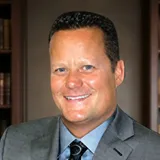 Patrick S. AguirrePersonal injury attorney · Long Beach
Callback request
Leave your contact information and, if helpful, a short general summary. The office will follow up.
The office received your contact request. If your matter is urgent, call 562-904-4337.
The deadlines
Two years from the injury is the general rule under Code of Civil Procedure 335.1. Property damage runs separately for three years. Medical negligence has its own rule under Code of Civil Procedure 340.5: one year from when the injury was or should have been discovered, and never more than three years from the injury, with narrow exceptions, plus a 90-day notice before filing.
The six-month government claim rule ends more valid claims than anything else. Where a city, county, transit agency, school district, public hospital, or a dangerous condition of public property is involved, a written claim must be presented within six months under Government Code 911.2, and only six months remain to sue after it is rejected. A collision with a city bus, a fall on public property, or care at a county hospital is on that clock from day one.
Claims by minors, and claims where an injury was not discoverable at the time, run on different rules. If there is any doubt, the deadline should be assumed to be the short one until it is confirmed otherwise.
Sources: Code of Civil Procedure 335.1 — two years for injury or death; Code of Civil Procedure 338(c) — three years for property damage; Code of Civil Procedure 340.5 — medical negligence: one year from discovery, three years outer limit; Government Code 911.2(a) — six months to present a government claim; Government Code 945.6(a) — six months to sue after rejection.
Fault
Civil Code 1714 states the basic rule: everyone is responsible for an injury caused to another by their want of ordinary care in managing their person or property. A negligence claim requires a duty, a breach of it, causation, and damages, and all four are proved with evidence rather than asserted.
California uses pure comparative fault. Being partly responsible reduces the recovery by that percentage and never bars it, even at a high share. Insurers spend most of their effort building that percentage rather than denying liability outright, which is why early recorded statements matter so much.
There is usually more than one responsible party, and finding all of them is often worth more than any argument about the facts: an employer where the person was working, a property owner, a contractor, a manufacturer, a vehicle owner, or a public entity. Each may carry separate insurance.
Sources: Civil Code 1714(a) — everyone is responsible for injury caused by want of ordinary care; Civil Code 3333 — the measure of damages in tort; Government Code 835 — dangerous condition of public property.
What reduces recovery
Proposition 213 bars non-economic damages entirely where the injured person was the owner of an uninsured vehicle they were driving, or was convicted of DUI arising from the incident. Economic losses remain recoverable. It applies regardless of how badly hurt the person was or how clearly the other driver was at fault, and it changes case value more than almost any other single rule.
In medical negligence cases, Civil Code 3333.2 caps non-economic damages. The 2026 figures are $470,000 for injury and $650,000 for wrongful death, rising each January under the schedule the statute sets. Economic damages are not capped.
Liens reduce what reaches the client: health insurance, Medi-Cal, Medicare, and medical providers treating on a lien all assert claims against a recovery, and negotiating them down is a real part of the work rather than an afterthought.
Sources: Civil Code 3333.4 — Proposition 213: no non-economic damages for uninsured owner-drivers or drivers convicted of DUI; Civil Code 3333.2(b)–(g) — the medical malpractice cap on non-economic damages; Civil Code 3333.1 — collateral source evidence in malpractice cases.
The claim
Economic damages are the documented losses: medical expenses already incurred, the future care a physician says will be needed, lost income, and lost earning capacity where the injury changes what a person can do for a living. In serious cases the future-care component dominates everything else, and it is established through treating physicians and, where warranted, a life-care plan reduced to present value.
Non-economic damages cover pain, suffering, disfigurement, physical impairment, and the loss of things the person used to be able to do. There is no formula. Anyone applying a multiplier to the medical bills is describing an insurer’s internal software, not California law.
What a case is worth depends on liability, the medical record, permanence, and the coverage that actually exists. A number given before those are known is a guess, and none is offered here.
The first weeks
Gaps in treatment are the single most effective argument an insurer has, used to claim the injury resolved or was never related. Follow every referral and keep the appointments.
Nothing requires it. Those statements are taken early, before the injuries are understood, and are used afterwards to argue inconsistency or comparative fault.
Surveillance footage is usually overwritten within days. Vehicles get repaired. Scenes get cleaned and repaired. Photographs taken now, and a preservation letter sent now, are often the whole case later.
A release is permanent and usually covers every party named in it. Early offers arrive before the full extent of an injury is known and cannot be reopened when treatment turns out to be longer.
If a city, county, school, transit agency, or public property is in the picture, the six-month claim clock started on the day of the injury.
The office
The office has represented injured people in Long Beach and across Los Angeles County for nearly three decades, in the matters set out on the practice pages linked below.
The early work is coverage and evidence: identifying every policy that might respond, including the client’s own uninsured and underinsured motorist coverage, preserving what is about to be lost, and protecting any government claim deadline. No result is promised here, and the honest answer about value early in a case is that it is not yet known.
The firm has offices in Long Beach and Downey and speaks Spanish.
Frequently asked questions
Generally two years from the injury under Code of Civil Procedure 335.1. Medical negligence runs under Code of Civil Procedure 340.5 instead, at one year from discovery and no more than three years from the injury. If a public entity is involved, a written government claim is due within six months under Government Code 911.2, and after rejection only six months remain to sue.
The consultation is free. It is a conversation about what happened, what injuries there are, what insurance may be available, and which deadlines are already running — particularly the six-month government claim deadline, which is the one most often missed. Fee arrangements are discussed directly and set out in writing before any work begins.
Yes. California uses pure comparative fault, so your share reduces the recovery proportionally rather than barring it. People regularly assume they have no claim because an officer said something at the scene or because they think they contributed, and that assumption is frequently wrong.
Not before knowing the full extent of the injury. An early offer is made before treatment is complete, and the release you sign to accept it is permanent and usually covers everyone named in it. It cannot be reopened if surgery becomes necessary later. Have it reviewed first.
It depends on liability, the medical record, whether the injury is permanent, and how much insurance coverage actually exists. Nobody can answer it honestly in the first conversation, and a lawyer who gives a figure before seeing the records is guessing. What can be done early is identifying the coverage and protecting the deadlines.
Selected case results
A selection from 55 documented results
$2,850,000
Premises liability
$320,000
Maricopa County, Arizona
$480,000
Premises liability
$520,000
Maricopa County, Arizona
$360,000
Los Angeles Superior Court
Client experiences
“Patrick and his staff were very helpful with taking care of all the bills and legalities, so we can focus on healing.”
“Got my money and my vehicle fixed. Don’t hesitate to give them a call.”
“Patrick helped me with a dog bite case. He was able to get me more than I expected and was easy to work with. … I would recommend his services.”
“Patrick is very reliable, trustworthy, and will definitely be able to help you out. Cost is very reasonable.”


Meet your attorney
A Professional Law Corporation
The future of your case may depend on a successful outcome. It can be stressful to go through the legal process alone—but thankfully, you don’t have to.
The Law Offices of Patrick S. Aguirre will stand up for clients’ interests and rights, providing high-quality representation in personal injury cases and criminal defense matters throughout California from its Long Beach office.
We work with you and for your best interests. Our legal team is compassionate, hard-working, and tenacious—fighting to get the job done right when it matters most. No case is too complicated or insignificant for our full attention. Our clients may move forward into a brighter future free from worry about past mistakes.
We’re the legal team that never gives up. When you need an attorney who will fight for what’s right, turn to us, and we’ll do everything in our power to help. No matter how challenging your situation may seem, there is hope.
“Courage is the most important attribute of a lawyer.”
Robert F. Kennedy
Free consultation
Tell us how to reach you and the office will call you back to discuss your accident and your options.

Callback request
Leave your contact information and, if helpful, a short general summary. The office will follow up.
The office received your contact request. If your matter is urgent, call 562-904-4337.